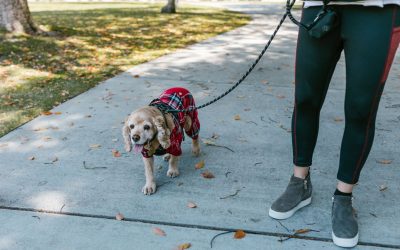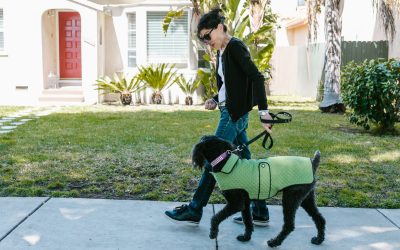
If you’ve been outside in Durham this month, you already know: May 2026 has been up and down in terms of heat. The Triangle recorded four consecutive days of record-high temperatures this past week, with the thermometer at RDU hitting 97°F on May 19—breaking a record that had stood since 1962—and 96°F the following day! July is normally the hottest month of the year for central North Carolina, with average highs around 91-92°F. We have already seen temps past that average range, and it’s not even summer yet.
For dog owners, this isn’t just uncomfortable. It’s a meaningful safety issue, and it’s one that catches people off guard precisely because dogs don’t communicate distress the way humans do.
Dogs Don’t Cool Down the Way We Do
Humans sweat across most of our body surface, which is a highly efficient way to regulate temperature. Dogs primarily dissipate heat through panting, and to a lesser extent through the pads of their feet. Panting works, but it’s significantly less efficient than sweating—which means dogs heat up faster and cool down more slowly than their owners often realize.
This matters on a walk because a dog can look and act completely normal right up until they don’t. By the time obvious distress is visible, the situation has often already escalated.
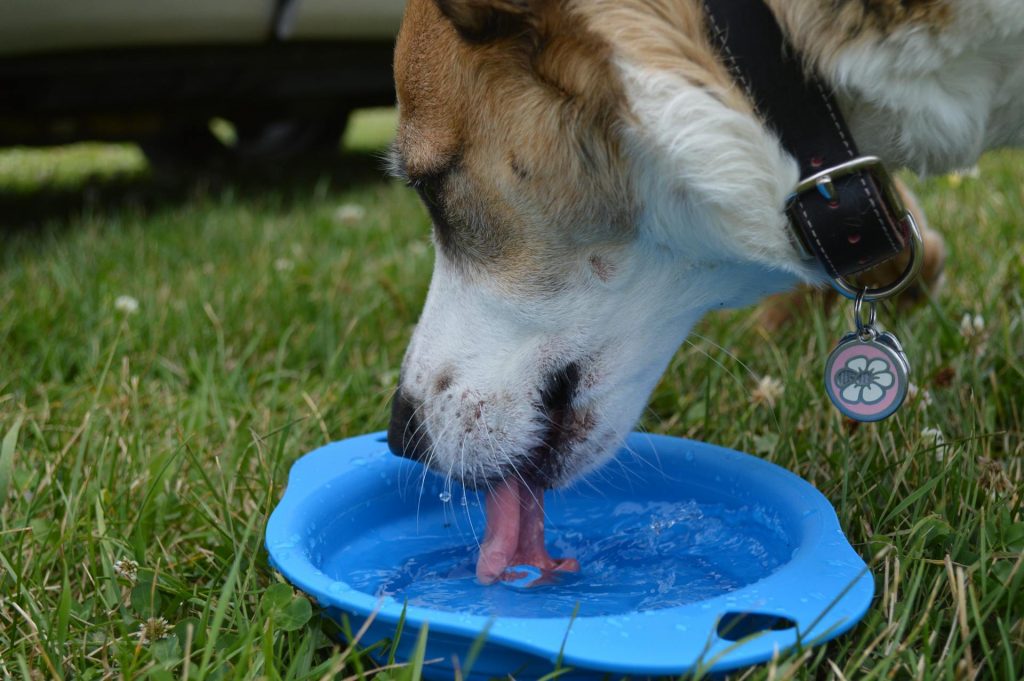
Signs Your Dog Is Getting Too Hot
Early signs — these are your cue to find shade, slow down, and offer water:
- Excessive, heavy panting (more than usual for the exertion level)
- Slowing down or reluctance to keep moving
- Seeking shade or trying to stop and lie down
- Excessive drooling or thicker-than-normal saliva
- Bright red gums or tongue
Signs that require immediate action (stop the walk, get the dog into a cool environment, and contact your vet):
- Vomiting or diarrhea
- Stumbling, disorientation, or weakness in the legs
- Glazed or unfocused eyes
- Collapse or loss of consciousness
Heat stroke in dogs is a medical emergency. It can develop quickly, and it can be fatal. A dog that has gone from “panting heavily” to “stumbling” in the span of a few minutes is a dog in serious trouble.
The Pavement Problem
Air temperature is only part of the equation. Asphalt and concrete absorb heat throughout the day and can reach temperatures significantly higher than the ambient air—pavement surface temperatures can exceed 125–145°F on a hot sunny day, even when air temperature is in the low 90s.
Dogs walk directly on that surface. Prolonged contact can cause pad burns, and the heat radiating up from the ground also accelerates their overall body temperature.
The standard test: press the back of your hand flat against the pavement for seven seconds. If you can’t hold it there comfortably, it’s too hot for your dog’s paws.
Timing and Route Matter More Than You’d Think
On days like the ones Durham recently experienced, the safest windows for walking are before 10am and after 7pm, when both air and pavement temperatures are meaningfully lower.
Shaded routes also make a real difference. A walk through a tree-lined neighborhood or a park with canopy cover is not the same as a walk along an exposed sidewalk in direct sun, even at the same air temperature.
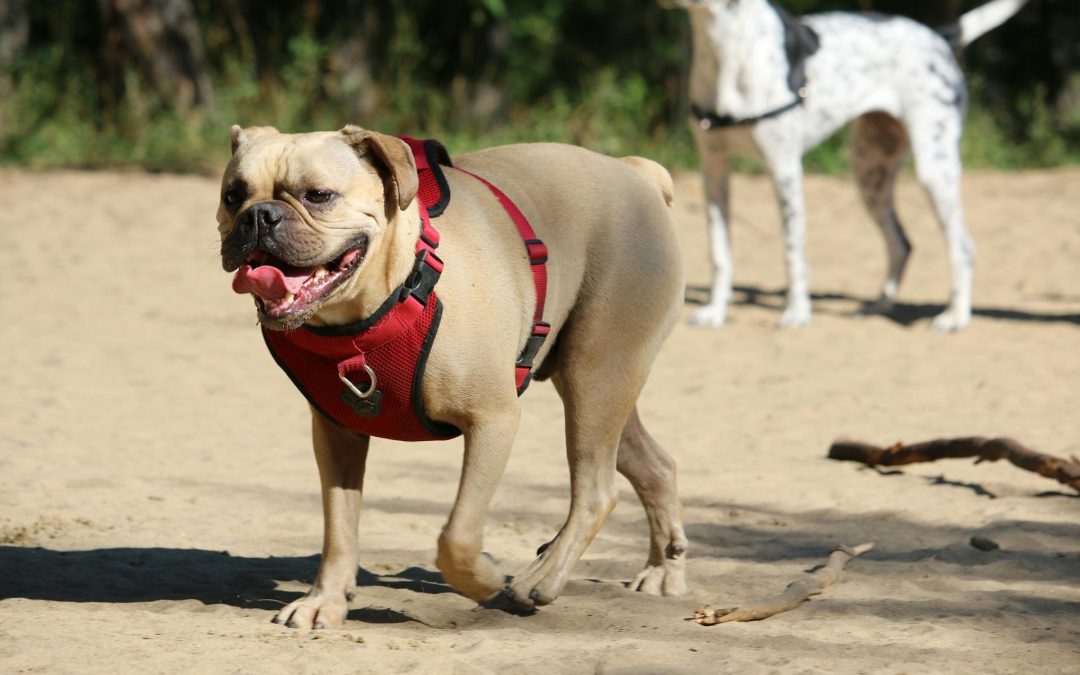
Short-nosed (brachycephalic) breeds like bulldogs, French bulldogs, pugs, and Boston terriers face elevated risk in the heat because their anatomy makes panting less efficient. Senior dogs and overweight dogs are also more vulnerable. For these dogs, heat thresholds are lower and warning signs can appear more quickly.
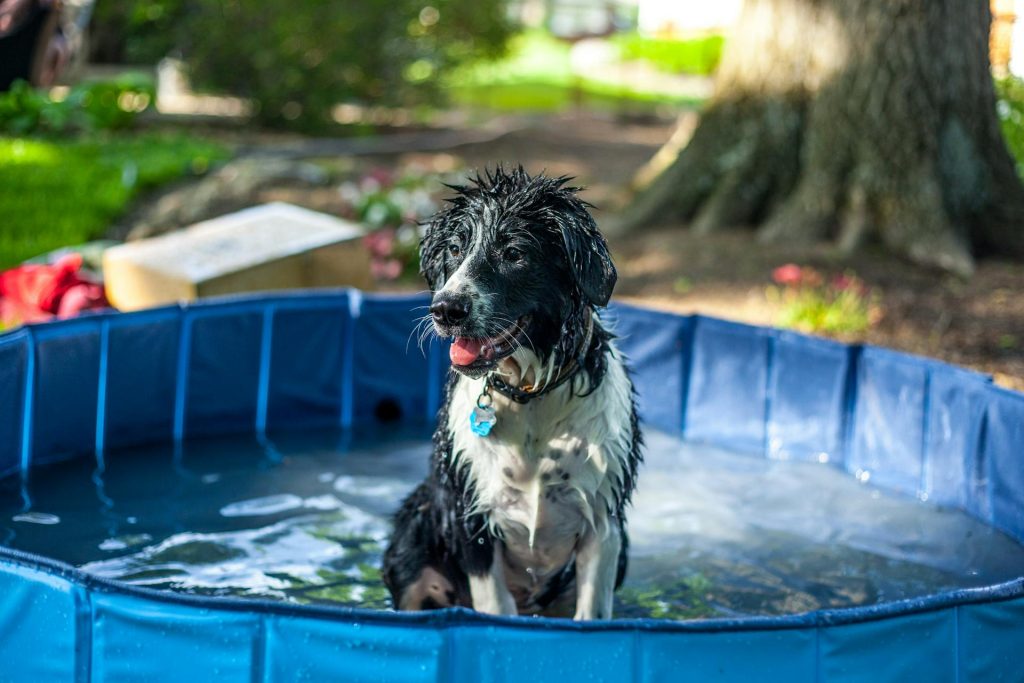
Why This Is Part of What a Professional Dog Walker Does
Knowing when not to walk a dog—or how to modify a walk for safety—comes with experience and training.
A knowledgeable dog walker isn’t just someone who shows up and clips on a leash. They’re monitoring the dog’s condition throughout the walk, adjusting pace and route based on how the dog is responding, carrying water, knowing what early distress looks like, and making judgment calls about when to cut a walk short.
At Bull City Pet Care, our walkers are trained to handle Durham summers—which, as this month has demonstrated, can arrive well before June. Our mid-day dog walking service is built around exactly this kind of attentive, safety-conscious care. We know the neighborhoods, we know the routes with shade, and we know how to read a dog who’s starting to struggle before it becomes an emergency.
A Quick Reference for Hot Weather Walks
- Walk before 10am or after 7pm on hot days
- Test the pavement with the back of your hand for 7 seconds before starting
- Bring water — dogs need to drink during walks in the heat, not just after
- Watch for early signs: heavy panting, slowing down, seeking shade
- Know your dog’s risk level — brachycephalic, senior, and overweight dogs hit their limit sooner
- When in doubt, cut it short — a shorter walk on a hot day is the right call
Durham summers are long and they’re getting hotter. Building heat awareness into your dog’s care routine now is better than learning the hard way in August!
If you’re looking for a dog walker in Durham who takes this stuff seriously, we’d love to hear from you. You can also learn more about our mid-day dog walking service here!
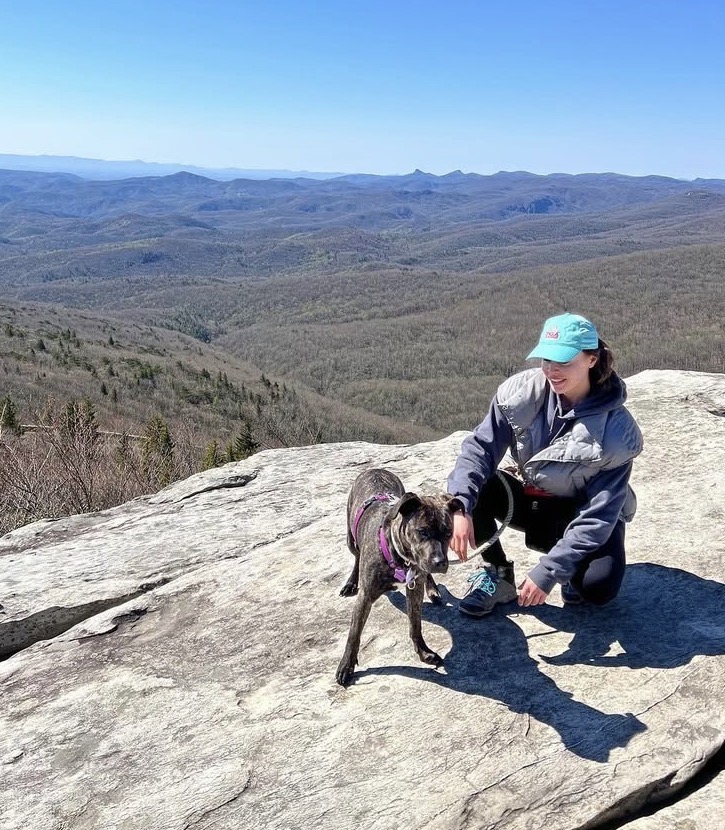
Annika Hugosson is a writer and marketing specialist with professional experience writing across various industries including sports, tattooing, veterinary medicine, and animal welfare. She has worked in soccer media, animal sheltering, and emergency veterinary medicine and presently manages a Durham tattoo shop, Ethereal Tattoo Gallery. Annika holds a Master of Science in anthrozoology (human–animal studies) and has completed additional graduate-level research focused on the human–animal bond. Her master’s research examined hyenas and the ways their portrayal in popular and scientific media shapes public perception and conservation outcomes. She has been published in academic journals and has presented at conferences on topics including pit bulls and gender, the usage of snakes’ skins in fashion, animal ethics in Harry Potter, and related issues at the intersection of culture, animals, and society. Outside of her professional work, Annika is interested in R+ dog training and has completed extensive group class training with her dog, Hawthorn, whom she adopted from the APS of Durham.