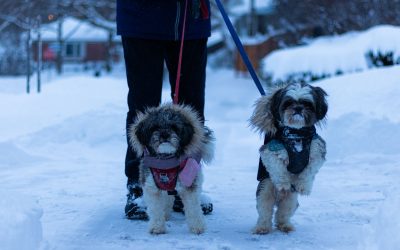
On Sunday, November 1, 2026, clocks fall back one hour at 2 a.m. Mornings get a little brighter, but the after-work dog walk suddenly happens in the dark. Durham’s sunset keeps creeping earlier until early December, when the sun goes down around 5 p.m. For anyone who walks their dog after work, that means weeks of walks in low light!
(A quick note: the U.S. House passed a bill in July 2026 that would make daylight saving time permanent, but as of late September it had not passed the Senate. Unless that changes before November, clocks will fall back as usual.)
Here is how to keep those darker walks safe, and how to help your dog adjust to the time change.
Why Dark Walks Deserve Extra Care
Visibility is the biggest risk. Federal traffic safety data shows that about three out of four pedestrian deaths in 2024 happened in the dark. A person in dark clothing walking a dark-coated dog can be nearly invisible to a driver until the last second.
Make Both of You Visible
Most of the fix is gear, and it is inexpensive:
- For your dog: a reflective or LED collar, harness, or leash, or a small clip-on light attached to the collar or harness.
- For you: a reflective vest or armband, plus a headlamp or flashlight so your hands stay free for the leash and waste bags.
- For dark-coated dogs: add a light even if you already use reflective gear. Reflective strips only work when headlights hit them. A light is visible all the time.
Check Your Gear Before It Gets Dark
Dogs startle more easily at night, whether it is a car door, a cat in the bushes, or a sudden noise. A startled dog backing out of a loose harness near a street is a real danger. Before the time change:
- Check that harnesses and collars fit snugly and have no tears.
- Make sure ID tags are readable and microchip contact information is current.
- Use a standard leash instead of a retractable one, so your dog stays close. Our walkers no longer use retractable leashes at all, because of the safety risks and lack of control.
Choose Your Route Carefully
- Stick to lit streets with sidewalks. Some Durham neighborhoods have patchy sidewalks, and an unlit shoulder that feels fine at noon can be dangerous at 6 p.m.
- Walk against traffic when there is no sidewalk, so you can see oncoming cars.
- Watch for wildlife. Many animals are more active around dusk, so keep your dog close and alert.
- Bring a light for cleanup. Finding what your dog left behind is much harder in the dark, and bagging it keeps waste out of Durham’s streams.
Help Your Dog Adjust to the New Schedule
Dogs do not read clocks, but they sure know exactly when dinner and walks usually happen (!). When the clocks shift, many dogs start begging for food early, pacing, or having potty accidents.
Veterinarians generally recommend easing into the change:
- Start early. About a week before November 1, begin shifting meals, walks, and bedtime by 10 to 15 minutes a day.
- Expect an adjustment period. Most dogs settle within a few days to a week. Puppies and seniors can take up to two weeks.
- Plan ahead for timed medications. If your dog takes medication on a strict schedule, such as insulin, ask your veterinarian how to shift the timing safely.
Let the Mid-Day Walk Do More of the Work
Once evenings are dark, the mid-day walk becomes your dog’s best chance at daylight exercise. Our daily dog walks are completed between 11 a.m. and 4 p.m., so they stay in daylight even in early December.
If your after-work walk gets shorter in winter, a 45-minute mid-day dog walking visit can make up the difference. Your dog still gets real exercise and sniffing time while the sun is up, and you get daily notes about how the visit went.
Frequently Asked Questions
When does daylight saving time end in 2026?
Sunday, November 1, 2026, at 2 a.m., when clocks move back to 1 a.m.
Is it safe to walk my dog at night?
Yes, with the right precautions: reflective or lighted gear for both of you, a well-fitted harness, a standard leash, and well-lit routes with sidewalks.
How long does it take a dog to adjust to the time change?
Usually a few days to a week. Puppies and senior dogs can take up to two weeks.
Keep Your Dog’s Days Bright This Winter
If darker evenings are cutting into your dog’s exercise, a consistent mid-day walker can help. New requests need to be made at least seven days before your start date. Request services here or call 919-740-7481!
Annika Hugosson is a writer and marketing specialist with professional experience writing across various industries including sports, tattooing, veterinary medicine, and animal welfare. She has worked in soccer media, animal sheltering, and emergency veterinary medicine and presently manages a Durham tattoo shop, Ethereal Tattoo Gallery. Annika holds a Master of Science in anthrozoology (human–animal studies) and has completed additional graduate-level research focused on the human–animal bond. Her master’s research examined hyenas and the ways their portrayal in popular and scientific media shapes public perception and conservation outcomes. She has been published in academic journals and has presented at conferences on topics including pit bulls and gender, the usage of snakes’ skins in fashion, animal ethics in Harry Potter, and related issues at the intersection of culture, animals, and society. Outside of her professional work, Annika is interested in R+ dog training and has completed extensive group class training with her dog, Hawthorn, whom she adopted from the APS of Durham.